How to Plan Your Daily Drawing Practice Routine
Motivation follows Action.
Drawing daily drawing isn’t about grinding or filling sketchbooks with mandatory work. The goal is for consistency to strengthen your motivation. Showing up is often the hardest part, but that’s a good thing. With dedicated effort drawing will become a part of your identity, not a task you negotiate with yourself.
A good routine doesn’t demand more energy. It removes friction.
Start With Time, Not Ambition
The biggest mistake artists make is planning for their “best” days. Big no no. truly sustainable routines are built for your average performance.
Choose a time window you can realistically protect: 15, 20, or 30 minutes is enough. Consistency compounds faster than long, irregular sessions.
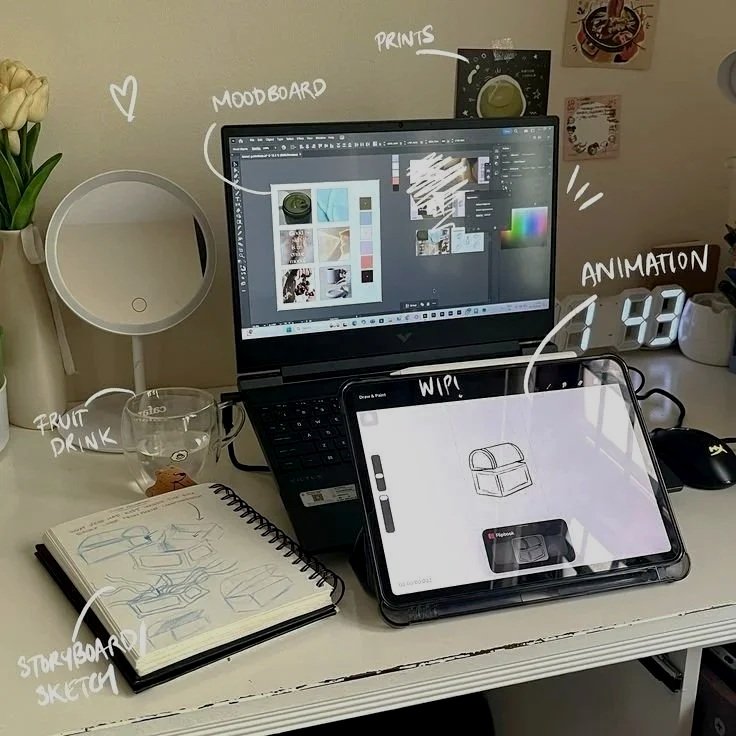
The real magic happens when this time is paired with a physical cue. A dedicated sketchbook or workstation signals that this is low pressure, repeatable work. Not a performance.
Separate Practice From Performance
Not every drawing is meant to be finished or shared. Your routine should include space for exploration. Be messy, doodle, implement ideas that go nowhere. Consider it an unfocused warmup.
This mental separation keeps perfectionism from hijacking the habit.
Using a cheap sketchbook, newsprint pad, or a no-frills digital canvas helps reinforce that a space is for learning, not judgement.
Rotate Focus, Don’t Chase Everything
Trying to improve everything all at once leads to shallow progress.
Instead…
…rotate your focus over the span of days: one day for gesture, another for faces, another for lighting or color.
You want to keep practice fresh while still building depth over time.
Many artists organize this by keeping simple reference folders, printed reference packs, or a tablet stand nearby so transitions between studies feel seamless.
End With Something Enjoyable
Always leave your session with a win. After a structured practice session, spend a little bit drawing something you actually love. You need to step out of your comfort zone to grow, but be careful to avoid burning out.
This emotional regulation is what keeps routines alive.
Having a comfortable drawing setup also helps: a supportive chair, a reliable stylus, or even a small desk lamp. Whatever makes it easier to stay present instead of watching the clock [affiliate link].
Track Consistency, Not Quality
Progress shows up quietly. Instead of judging your performance, track whether you showed up at all. A simple checkmark system (planner or minimalist wall calendar) builds momentum.
Turn consistency into something you can seen.
Let the Routine Work for You
A daily drawing routine shouldn’t feel heavy. It should feel inevitable.
When your time, tools, and expectations align, practice stops being something you “try” and becomes something you just do. That’s when improvement happens.
